Team involved: Design Function, CTO Office, Product Governance
Duration: September 2024 - Ongoing
Tools: Google Spreadsheet
To make prioritization more objective and transparent, We (Service Design Chapter at F-Secure) introduced the OVI index, a decision framework that evaluates opportunities through desirability, feasibility, and viability.
Rather than relying on opinions, teams could compare initiatives using shared criteria and focus on what delivers the highest impact. I facilitated the rollout and worked closely with stakeholders to embed it into everyday decision-making.
The Challenges
Opportunity prioritization across teams lacked structure and alignment. Decisions were often reactive and influenced by short-term pressures rather than a shared understanding of customer value and long-term impact.
As a result, promising opportunities were missed while time and effort were spent on lower-impact initiatives. In practice, we saw several recurring issues:
• Opportunity selection was ad-hoc, with little consistency across teams
• Priorities were often driven by the loudest stakeholder or immediate partner demands
• Customer needs and experience impact were not systematically considered or quantified
• There was no shared decision-making framework across business, design, and technology
• Teams struggled to compare opportunities objectively, especially across different areas
• This lack of structure led to misalignment, rework, and lost strategic potential
What is OVI?
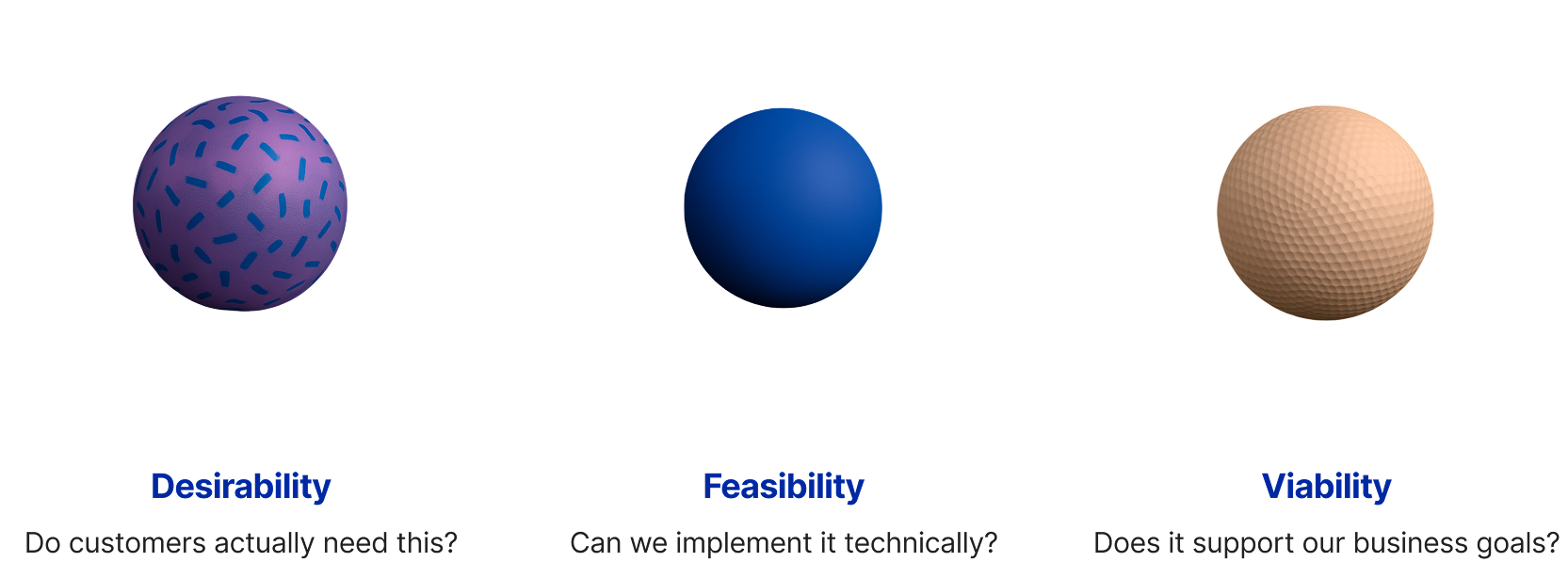
OVI (Opportunity Value Index) is a simple score that helps XMs & PMs make balanced, cross-functional decisions by evaluating opportunities across 3 key pillars:
• Desirability : Do customers actually need this?
• Feasibility : Can we implement it technically?
• Viability : Does it support our business goals?
Each pillar is assessed using clear criteria and weighted to reflect its importance. The combined score provides a holistic view of an opportunity’s potential value, helping teams prioritize initiatives that deliver the most impact for customers and the business.
OVI Formula
Desirability
Desirability is where customer-centricity begins.
It anchors decisions in real customer needs rather than assumptions, internal pressures, or what is simply possible to build.
Aligned with F-Secure’s vision of becoming the #1 security experience company in the world, Desirability asks a simple but critical question: does this opportunity meaningfully improve the customer’s experience?
It evaluates whether an initiative addresses a genuine pain point, creates tangible value, and positively impacts the end user. This ensures we don’t just prioritize what is technically feasible or commercially attractive, but what is truly valuable.
Without Desirability, teams risk optimizing for the wrong outcomes, solving internal problems or building features that customers neither need nor use. By consistently bringing the customer’s voice into prioritization, Desirability keeps our roadmap grounded in purpose and impact.
Viability
Viability ensures that the opportunities we pursue are sustainable and worth the investment.
Beyond being desirable for customers and feasible to deliver, initiatives must also create meaningful business and ecosystem value.
It evaluates whether an opportunity supports long-term strategy, strengthens partner success, and delivers measurable returns relative to the effort required. This includes considerations such as ROI, OKR alignment, partner impact, and operational cost.
By bringing a business lens into prioritization, Viability helps focus resources on initiatives that generate lasting value, not just interesting ideas or short-term wins.
Feasibility
Feasibility grounds ambition in reality.
Even the most compelling opportunities must be deliverable within our technical, operational, and organizational constraints.
It evaluates whether we have the capability, capacity, and infrastructure to implement and sustain an initiative effectively. This includes considerations such as technical complexity, available skills, system readiness, scalability, and long-term maintenance effort.
By introducing a delivery lens into prioritization, Feasibility ensures that strategy is supported by execution, turning vision into outcomes rather than intentions.
Defining the criteria
The OVI index is not a fixed scoring model. The criteria and their relative weight are intentionally adapted based on the context of the opportunity.
Different types of initiatives require different lenses. For example, product improvements, technical investments, and internal enablement efforts create value in different ways, and should not be evaluated using the same assumptions. Similarly, opportunities targeting consumers, partners, or internal teams may require different success measures.
Rather than applying a one-size-fits-all formula, we tailored the criteria to reflect what value truly meant in each situation. Example of Criteria we used included:
• Desirability
• Need and Experience Impact
• User coverage
• Ease to perceive customer value
• Viability
• OKR Alignment
• Potential ROI
• Partner Success and Growth potential
• Feasibility
• Infrustructure and Architecture
• Tech team Expertise Fit
• OpEx Tech
In Practice
OVI isn’t just a scoring model. It’s a lightweight decision-making tool that helps teams align faster, prioritize more objectively, and invest in opportunities with the highest impact.
Because it’s heuristic rather than heavy, it can be applied flexibly across everyday workflows, from idea boards and backlog grooming to roadmap discussions, OKR planning, quarterly prioritization, or even bug handling. It requires little preparation and supports quick, structured evaluations without slowing teams down.
In this way, OVI becomes less of a framework and more of a habit, a simple way to consistently bring customer value, delivery reality, and business impact into every decision.
OVI's rolling out at F-Secure
Rolling out OVI as a new way of working and prioritizing was completely another story. The framework was the easy part. Getting people to actually change their behavior was the real work.