F-Secure had identified a clear gap: no unifying Employee Value Proposition, no defined Employee Experience journey, and no internal stakeholder profiles or tooling to design one.
The Director of Employee Experience, together with HR, had already done the strategic work of defining the desired journey, four phases spanning the full employee lifecycle, each anchored to a defining moment and a "Fellow" voice:
• Talent Acquisition & Recruitment: Attract and recruit me
• Pre- & Onboarding: Get me started
• Performance, Recognition & Growth: Enable me to thrive and grow
• Exit & Offboarding: Have a place in my heart
What was missing was the operational layer: a methodology and a tool to actually build these journeys out, populate them with real insight, and hand ownership to the people running each phase day to day.
That's where my work began, taking the first two phases (Recruitment, Pre- & Onboarding) from strategic intent into a working, owned asset.
Personas and roles
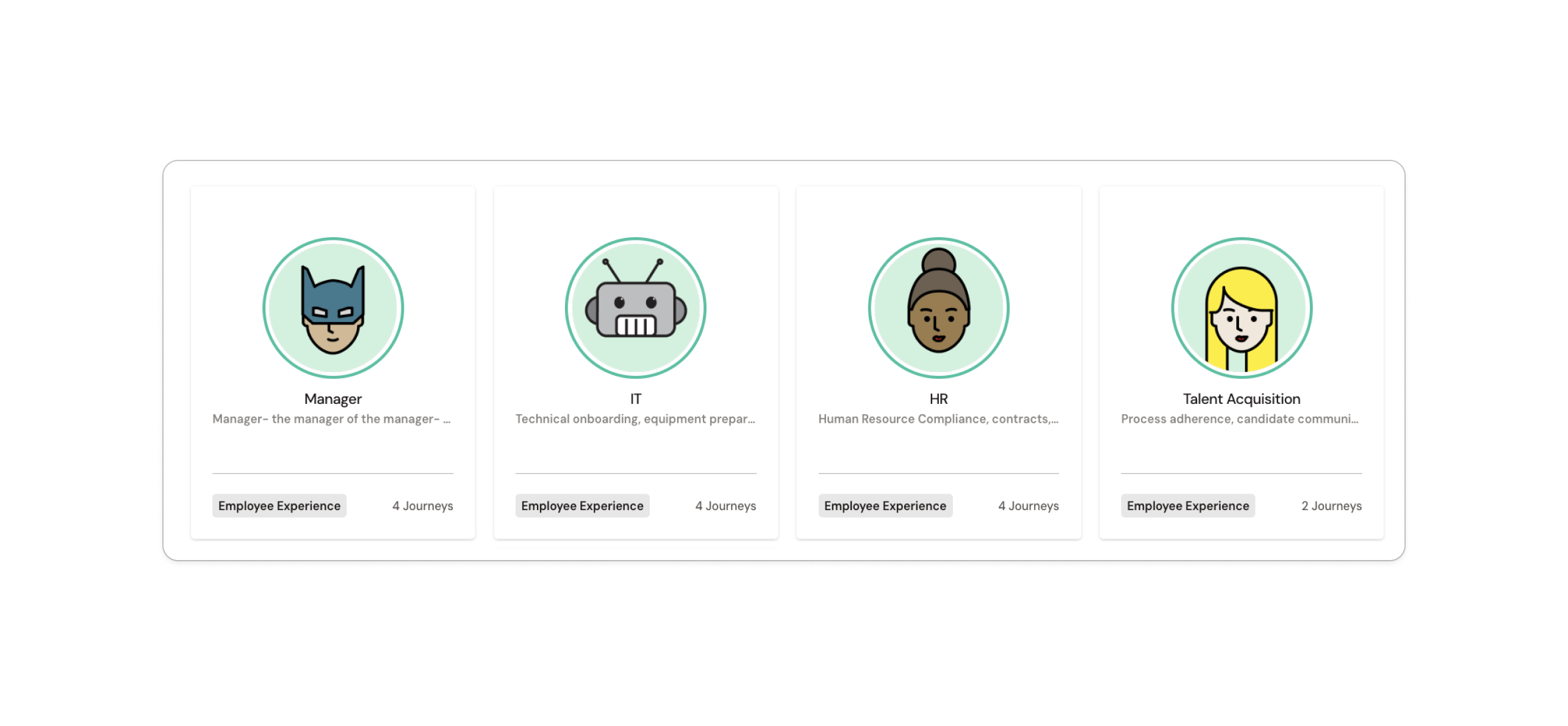
The journey is built around five roles, each with a distinct stake in the experience:
Candidate / New Hire
the primary persona. Their lived experience across each phase (what they need, what frustrates them, what makes them feel supported) is the foundation everything else is measured against.
Talent Acquisition Expert
owns recruitment-stage actions: candidate communication, process adherence, and the early signals that shape someone's first impression of F-Secure.
P&C (HR)
owns compliance, contracts, and the structural backbone of the employee lifecycle, from onboarding paperwork to policy.
IT
owns technical onboarding and equipment preparation, often invisible to the candidate but critical to whether their first days feel smooth or chaotic.
Team Lead/ Manager
owns the human side closest to the new hire day to day: integration, expectations, early feedback, and the relationship that shapes long-term experience.
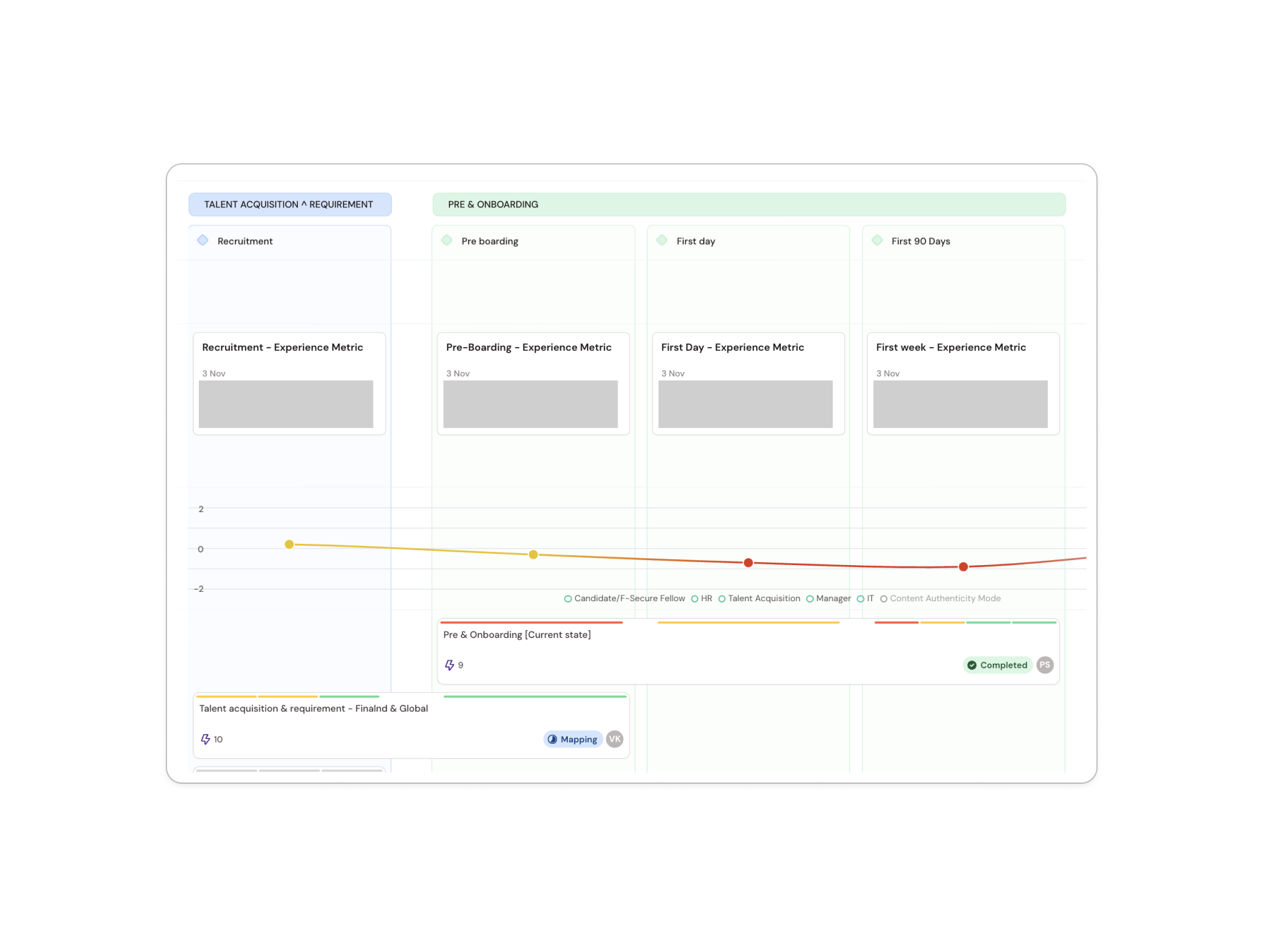
Each phase of the journey layers the Candidate/New Hire perspective against the relevant backstage roles, surfacing not just what each function does, but the pressures and constraints they face while trying to deliver the ideal experience.
The Structure of the journey map
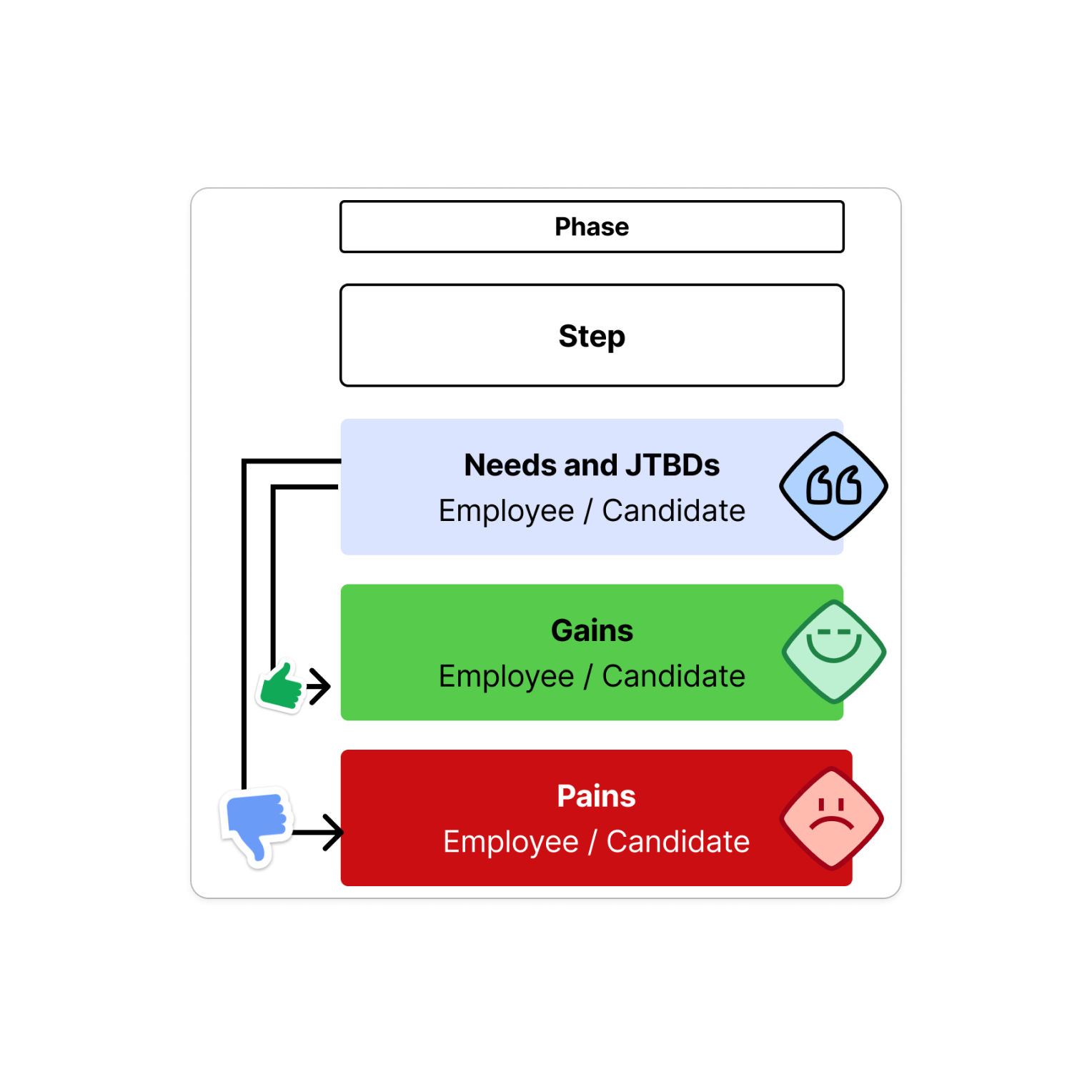
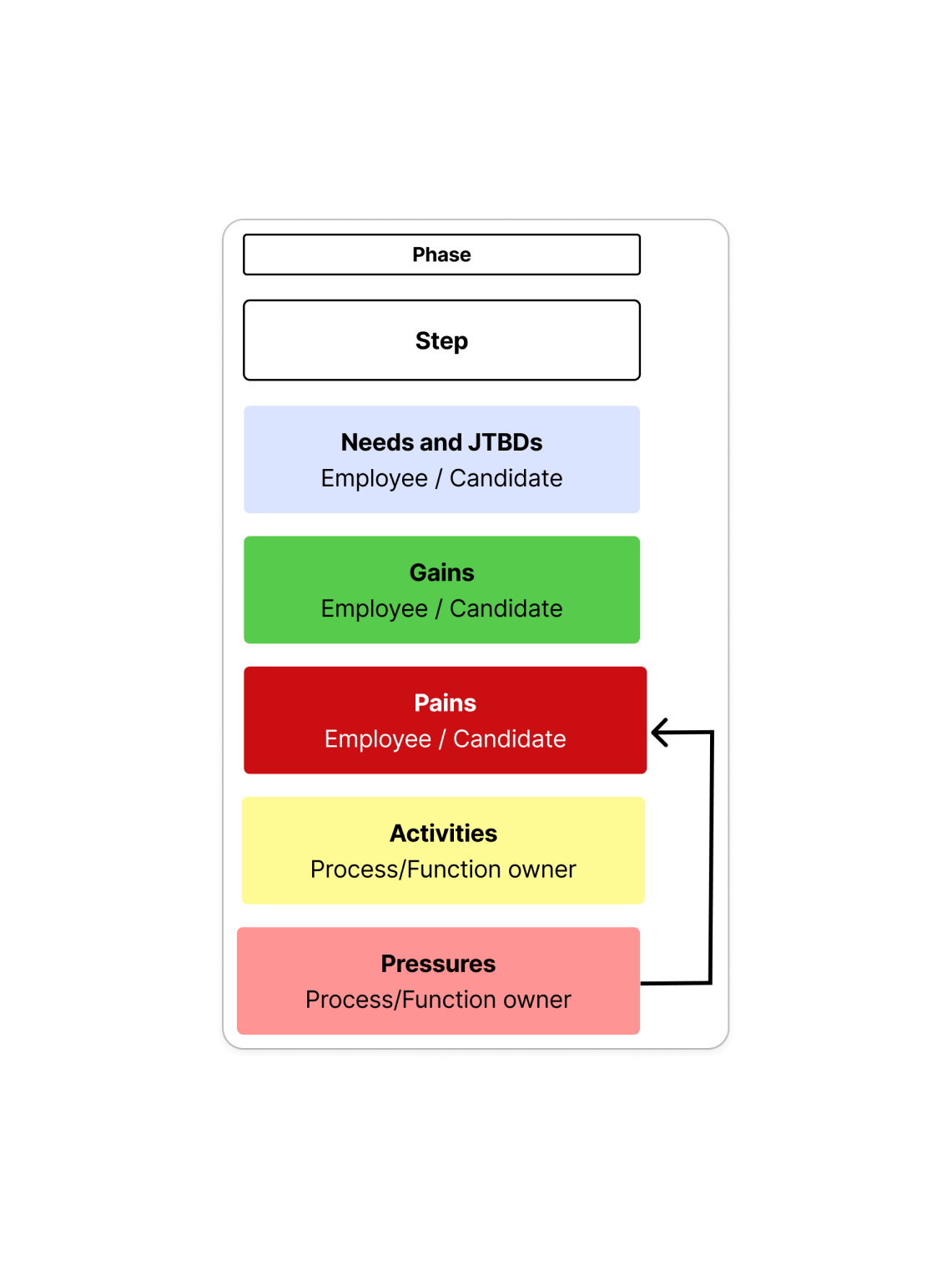
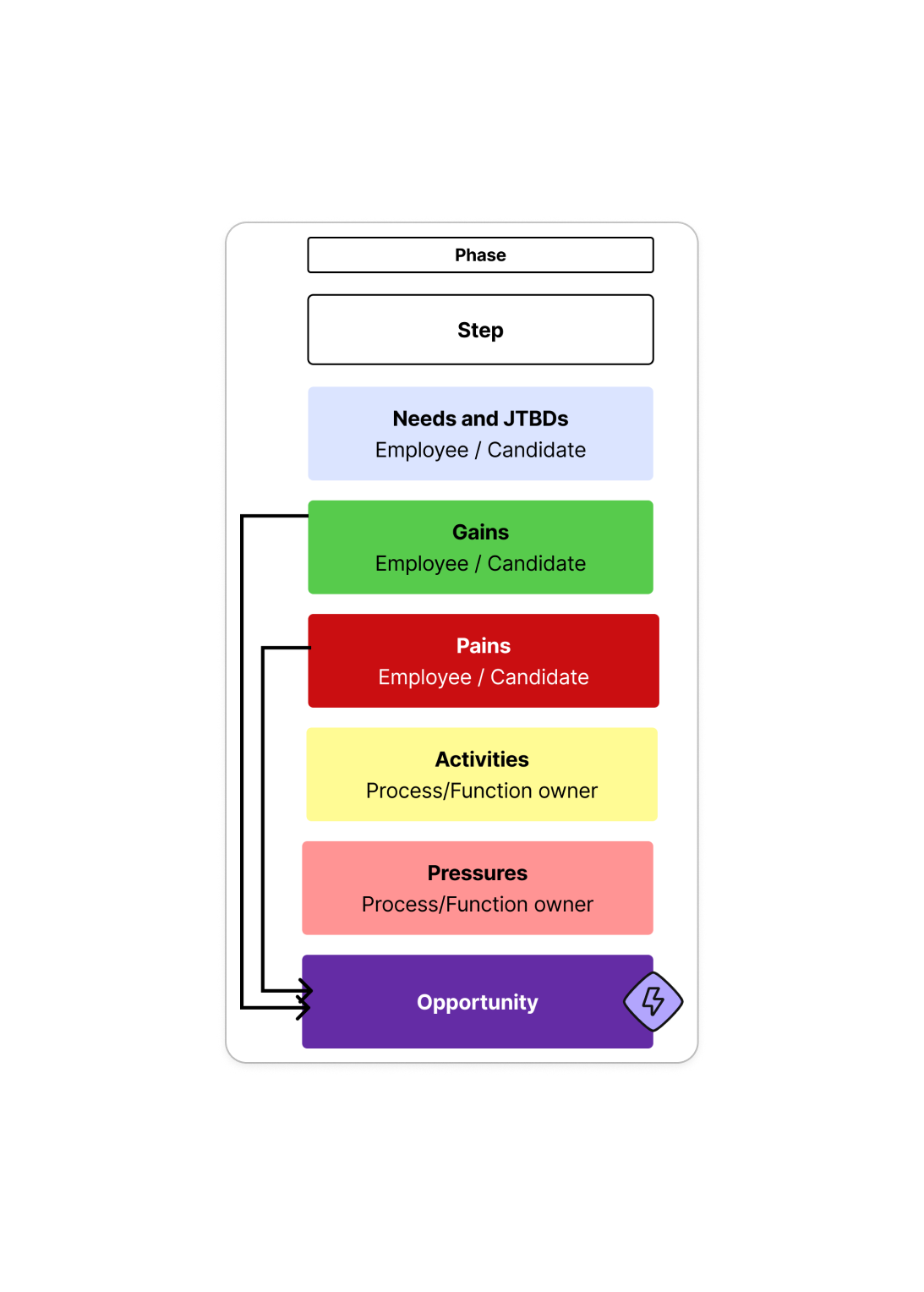
I structured each phase into three layers, working directly with journey owners rather than handing them a finished map:
Employee/Candidate Perspective
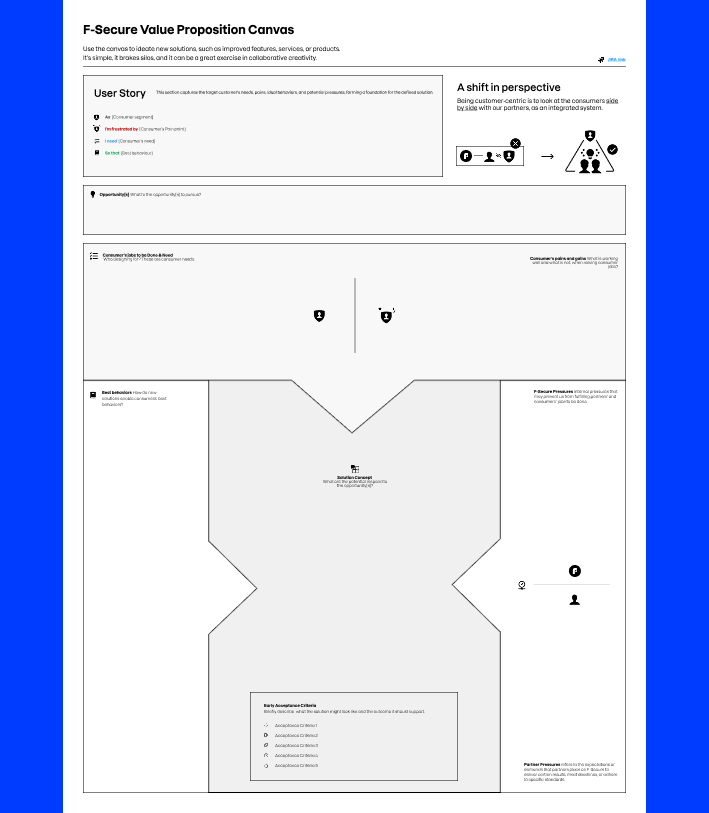
This is the foundation. For each phase, we identified the steps a candidate or new hire moves through, their needs and Jobs-to-be-Done at each step, and their pains and gains based on the services actually delivered by Talent Acquisition, HR, IT, and Team Leads.
Each pain and gain was scored to produce an experience metric per step, making it possible to see at a glance where the journey was working and where it was breaking down.
Process/Function Owner Perspective
This is the backstage view.
We mapped what the key functions actually do to deliver the experience, and just as importantly, the pressures and blockers that get in their way when trying to deliver the ideal experience.
Opportunity Identification
This is where the two views meet.
By comparing employee needs against backstage reality, we surfaced where the journey wasn't meeting key needs, which steps carried the highest pain-to-gain ratio, and where process owner activity was misaligned with what employees actually valued.
The outcome
By December 2025, the first two phases (Recruitment and Pre- & Onboarding) were fully mapped across all three layers, with named journey owners trained and using the tool independently. We had also proposed two next steps to make the journey sustainable: a future-state workshop to align the team on where the experience should go next, and a governance model defining the rituals for keeping the journey current.
The project stopped there. The Director of Employee Experience, who had sponsored and defined the original four-phase ambition, left the company before phases three and four, Performance & Growth, and Exit & Offboarding could begin.